Childhood development experts around the world are increasingly weighing in on the effects of technology on children. We’ve become used to riding technological waves, going all the way back to the arrival of the television in the 1930s. Each time, families gather around the table to debate the impacts on their children. Will this new device be positive or negative ? What are the long-term effects? In the mid 20th century parents worried that children watched too much TV. This sparked many studies that seem naively charming when considering what today’s child is exposed to. From hyper realistic violent games, unfiltered social media, to easily accessible on-line pornography, our kids are besieged at every turn.
This is difficult terrain for any parent to navigate. Sure, changing tech settings and monitoring access can help. But what about the everyday impacts? How do we encourage children to explore their world physically, without an App?
Tech exposure may be unavoidable, but it can be more balanced by setting aside some tech-free play and reading times each day. It can be as simple as reading a book to your child before bed. Creating a routine that both of you look forward to is key. Keep it simple, achievable and fun.
A Balancing Act | Tech-Free Reading
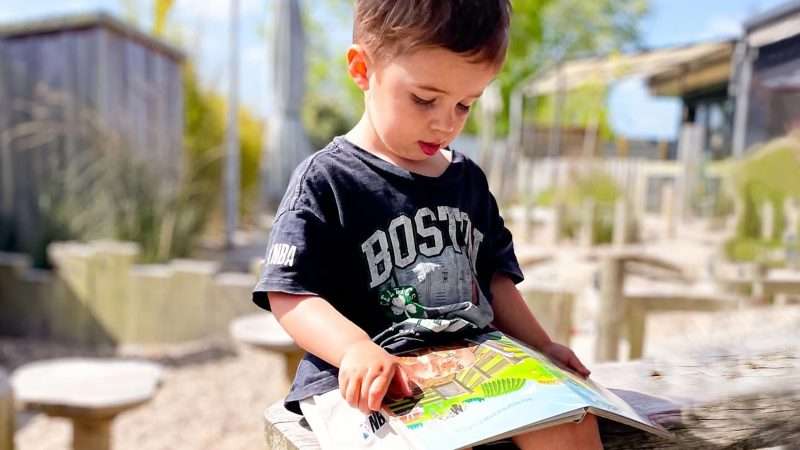
Spending more tech-free time with children helps reinforce the child-parent attachment. Introducing daily reading with your child (books not devices), improves literacy and comprehension skills. Research also shows that your stress level decreases by simply reading to babies as young as six months old (according to a study by the National Library of Medicine (U.S.A) in 2021).
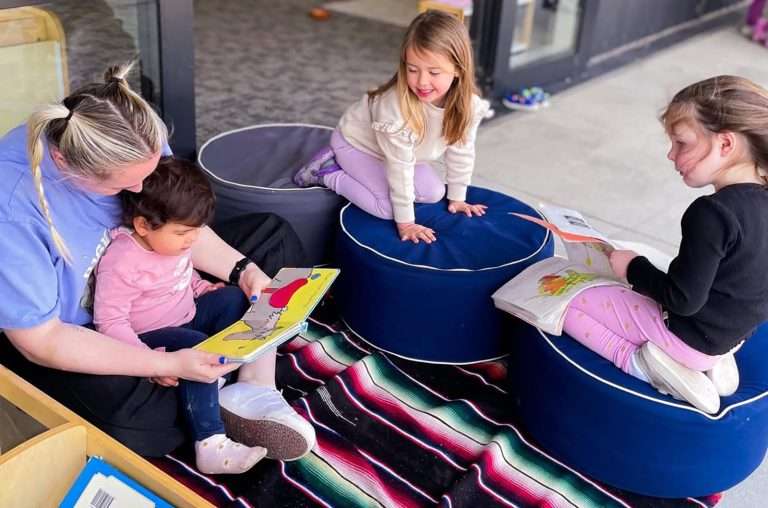
Other family members can also get involved! Create a positive learning environment at home, where the entire household can contribute. As childhood development expert Dr. Gabor Maté stresses, the parental/familial attachment should be prioritized over anything else. Technology should not be used as a replacement for human nurturing. He notes that “For children, attachment is an absolute need. And they must be attached to us emotionally until they’re capable of standing on their own two feet, able to think for themselves and to determine their own direction.” Creating a quiet space and time for reading is an ideal opportunity to build healthy, long lasting attachments.
Building Literacy
More exposure to non-digital reading and play helps build new neuropathways in a baby’s brain. Infants are remarkable in how quickly they learn to recognize speech patterns. They also learn visually and by hearing the sounds of speech. Phonics, a learning process that focuses on listening to letter sounds, is thankfully being taught again after being shelved decades ago. It works because children naturally learn and understand language this way. Studies show that young children largely do not learn language, communication and cognition from digital media – including television and TikTok videos.
Helping children with basic literacy skills is now a government priority since New Zealand hit the bottom of the OECD for literacy and numeracy (2015 study). As reported by Catherine McGregor in The Spinoff, a report in 2022 by Dr. Nina Hood of the Education Hub noted that “just 35% of students in year eight are achieving at or above the curriculum level for writing, while reading ability at both primary and secondary school levels is steadily declining.” Dr Hood said that “Only 60% of 15-year-olds in New Zealand are achieving above the most basic level of reading, meaning a staggering 40% are struggling to read and write.”
Paper vs Screen
What are the reasons for such a drastic decline in literacy? Many researchers now point to digital media. A recent study (Altamura, L., Vargas, C., & Salmerón, L. (2023). Do New Forms of Reading Pay Off? A Meta-Analysis on the Relationship Between Leisure Digital Reading Habits and Text Comprehension) claims that there is a “strong positive relationship between leisure print reading habits and reading comprehension” across an individual’s lifespan. Experts have shown that having books in the home and reading them regularly with your child improves comprehension and gives them a better start in school. The study shows that reading digital material does not have the same impact, “As online texts tend to have rather low linguistic qualities (Snow, 2010) and are often created for quick and brief consumption, such an increase in digital reading frequency could impact readers’ development of comprehension skills.”
More research is revealing how important it is to read to your child (with the added bonus everyone gains from participating in the experience). Reading to children will give them a substantial leg up in life. It’s a simple, fun way to build lasting connections with your child.
READING RESOURCES:
Love Your Library – Find your local library and sign up.
Auckland Libraries – Free books to borrow and other resources.
Storytime Foundation – Provides free books, education, and resources to New Zealand’s most vulnerable whānau in partnership with Tamariki Ora/Pēpi Ora and Family Start providers, Ministry of Education, and Department of Corrections. To date, they have delivered over 305,000 books to over 78,000 whānau with newborn and young children.
Storytime by RNZ – Free audio books, stories and music for kids of all ages.