Repetitive actions in children’s play are known as schemas. Children repeat these actions because they are trying to process and understand a concept fully. As parents, we may find this behaviour confusing or challenging, especially if it’s done in an unsafe manner. However, once we understand what our child is trying to achieve through these repetitions, it becomes easier to redirect their behaviour in a more productive and constructive way. Understanding their underlying intention helps us support their learning and development effectively.
These are some of the schemas you may observe in your child’s play:

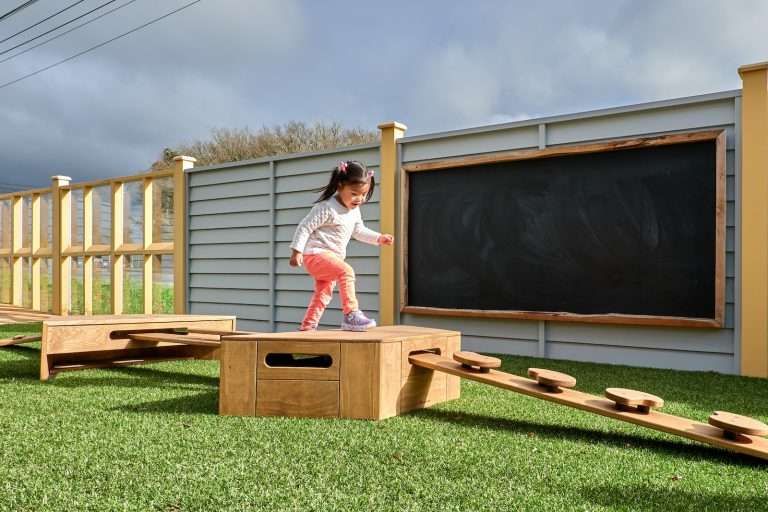
• Trajectory Schema involves children exploring height and distance and how they can manipulate their bodies to achieve this. If your child is constantly climbing on furniture and couches or finding any opportunity to throw their toys or food. To support this schema, provide safe opportunities for climbing like climbing frames or soft play shapes. For throwing, redirect them to soft items like foam shapes, soft balls, or a ball pit to satisfy this urge safely.
• Transporting schema is when your child frequently moves items from one place to another, either by hand or in a vessel. You can encourage this activity with a trolley, wheelbarrow, bags and containers.. For us in a childcare setting we often find they are transporting sand, we try redirect them to a designated area such as a trough or large bucket, making cleanup easier and prevents sand from ending up where you don’t want it. Some helpful ways you could encourage this at home is helping with putting the shopping away or watering the garden with a watering can allowing them the process of going and refilling.
• Enclosure Schema involves children enclosing themselves or their toys within containers or barriers. Younger children often explore this by climbing into boxes or small spaces, while older children may create barriers around their toys or draw circles or frames around their artwork. To support this schema, provide materials such as cardboard boxes or objects they can climb inside, allowing them to explore and extend their understanding of enclosure.
• Enveloping Schema involves children developing the idea of wrapping or covering themselves in items. They explore the concept of object permanence, understanding that even when something is hidden, it still exists. Children might engage in this schema by wrapping objects or themselves, or by dressing up with hats, scarves, and multiple necklaces.To extend this schema, you can encourage activities such as playing peek-a-boo, providing posting opportunities (like putting items into containers and taking them out), building forts or tents, and incorporating dress-up with scarves and costumes.
• Connecting Schema refers to children’s enjoyment of joining items together. This schema becomes evident when children engage in activities such as building with Lego, assembling train tracks, stacking blocks, taping objects together, threading beads, or physically connecting themselves to others by holding hands or linking arms. This reflects children’s innate desire to explore and understand relationships and connections between objects and people. It supports their cognitive and physical development by enhancing their spatial awareness, fine motor skills, and social interactions.